Respect the Architect – Kanye ‘s Anthimeria

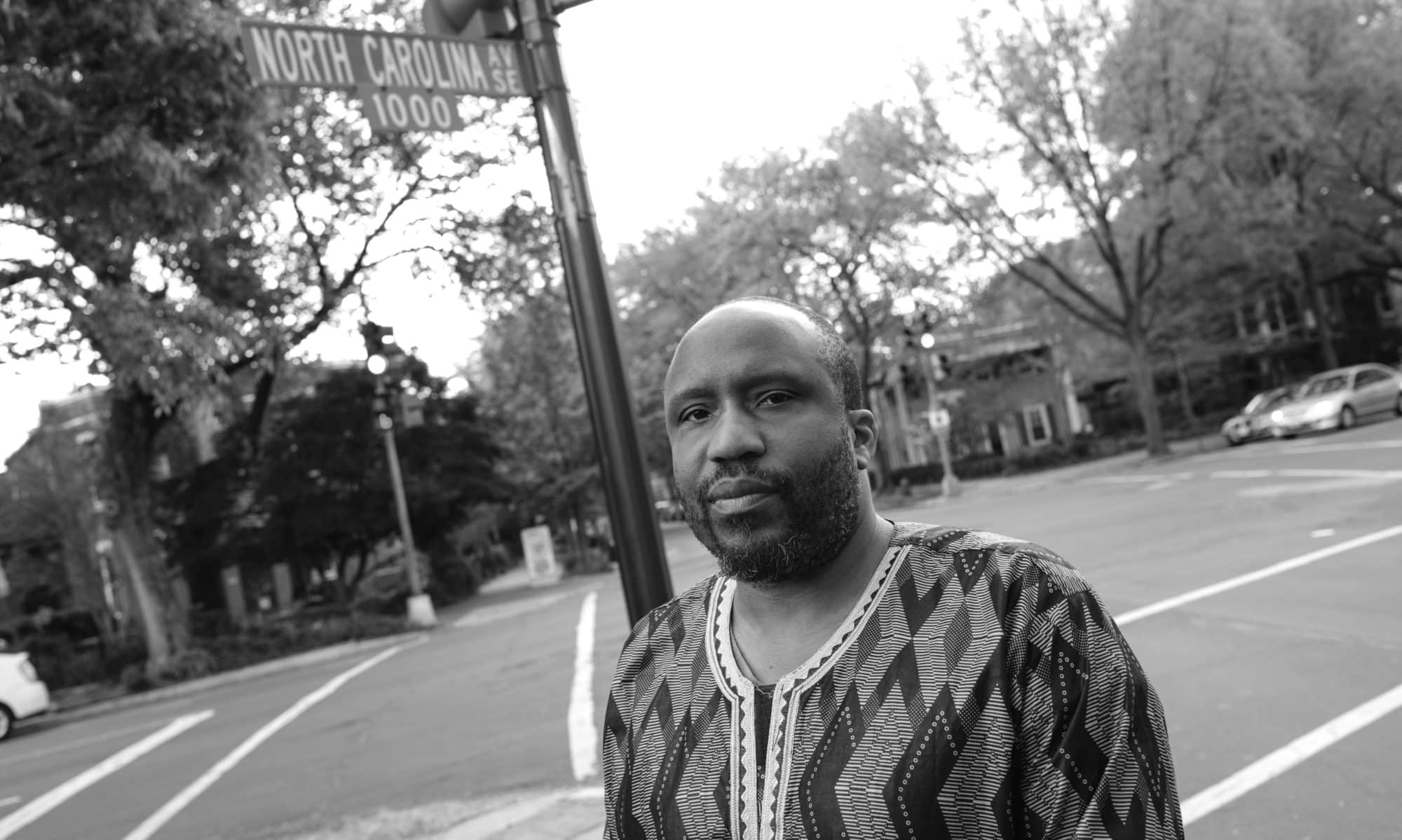
Kanye West © Noam Dvir, Instagram User dvirnm

Copyrighted image by dvirnm

So I guess I should start by saying I am not a Kanye fan and after reading about some of the blacklash…ahem backlash from members of the architecture establishment in Lian Chikako Chang’s article about Kanye’s recent visit to Harvard Graduate School of Design (I walk past here all the time while on Residency at Lesley doing my MFA)… I am still not a fan, but as poet/curator/hiphophead I really dug Kanye’s mini-lecture at Harvard School of Design.

The -lash  is mostly centered around Kanye’s use of the “architected”. I understand this on many levels as poet and as someone trying to deal with language I understand that he used a rhetorical device called Conversion or Verbification or Anthimeria  or sometimes known as “verbing the noun”. This is common practice in the African American creative realm and is found all over in African American literature, drama and so on and so forth, so it comes as no surprise that an artist whose currency is language would say something like this. I always love to hear Sonia Sanchez say “poeting” when she talks about what she does; graphic designer Alan Flecther also used the term in the title of book Picturing and Poeting.

What I really love about this specific term is that it another way to describe a process that takes something from an idea caught in the flesh and blood, that is in our brains and makes a “thing” out in the world. It speaks to a very deliberate and intentional process by which to bring something abstract into the physical world…I cannot argue with Kanye on that.
I think the more ways we can find to articulate that sentiment and work ethic the better, be it architecting, poeting, whatevering, etc.

The other thing that I think the -lash makes clear is that in a profession that is 91.3% “white”, the fear of having someone who does not look the part, but who has such a huge platform, co-opting their language appears to be a threatening proposition…

Anyway, go read Lian Chikako Chang’s article For Architects Only? How Kanye Exposed Architecture’s Bias, also check out Phaidon’s blog from over a year ago (July 2012) about Hip Hop Architecture, and other articles about Hip Hop Architecture here , here  , here  and the work of Earl S Bell for good measure. Also check out other examples of verbing the noun – “architecting” in the Caribbean with the “V is for Veranda” Project.

When you are done with all that go check out Guru and Bahamadia on Respect the Architect, (that phrase comes from a Biz Markie sample from Nobody Beats the Biz)…architecting for real!

UPDATE: Also shout out to Doug Patt author of How to Architect

Happy Birthday JB, August 2nd

Not this JB…

james-brown

This JB…


I don’t remember when I became interested in Baldwin, but I do remember seeing The Amen Corner
as a kid with my parents, and pulling Blues for Mister Charlie and The Fire Next Time
off my parents bookshelf and trying to make sense of the world that Baldwin was talking about. It would not be until I was a teenager that I would start to grasp how deep Baldwin is/was/be.

Much later than that I would come across Baldwin’s essay On Being White and Other Lies. This essay in a lot of ways made me rethink what it means for a group of people to decide and believe  that they are “White” and for that group of people to decide who else was or could become “White” . Conversely, that same group of people convinced of their “Whiteness” (pure, fair, just and deserving of honor) could also determine who would be their binary opposite, the “Blacks”. This essay for me also caused me to question “Blackness” as a function of being this binary opposite and the moral assignments that come along with it.

As student of Mathematics and Information Systems, I also started to think about the inability of a simple binary system in language to capture the complexity of humanity. For me, I find it hard to talk fully about  such complex in such simple terms. In intellectual, creative and progressive circle many of us push the envelope for more inclusive, complexity and nuanced, you see this so much in gender and sexuality discussions, you see it socioeconomic class discussions, yet when it comes to race  and culture we seem to be stuck with the binary.

Both “Whiteness” and “Blackness” are fiction despite the cultural, social, political and economic capital they wield and how real they feel. That is not to say that I am not connected to the substance of the experience in America we call “Blackness”, I am just not convinced that that label effectively or accurately captures that experience. Baldwin help to make that clear for me.

I am going to end with this anecdote, because I think it articulates what Baldwin was saying more clearly than I ever could. A few years ago, I was sitting on one of Dr.Greg Carr‘s lectures at Howard University and he said to a roomful of “Black” people, “In American society someone has to be Black, that don’t mean it has to be you.”  Hearing that made me re-visit Baldwin’s essay and gave me another way to look at the language we use and that is used against us…


African American Art and Culture on Tour (from International Arts & Artists)

header-black.pngdancetheatre.jpg“One of ballet’s most exciting undertakings.”
The New York Times, 1971 Dance Theatre of Harlem: 40 Years of Firsts

Highlighting Dance Theatre of Harlem’s 40-plus year history, this magnificent exhibition celebrates the history and art of dance with 22 costumes, set pieces, videos, photographs and tour posters from four staged ballets including: A Streetcar Named Desire, Creole Giselle, Dougla and Firebird. Dispelling the belief that ballet could not be performed by those of African decent, Arthur Mitchell and Karel Shook founded the Dance Theatre of Harlem in 1969. This multi-media exhibition captures the majesty of the choreography, the beauty of the costuming, and the dancers who defied gravity and stereotyping. With a modest beginning, holding classes in a warehouse on 152nd Street, the school has greatly expanded and since grown into a multi-cultural dance institution.

The exhibition comes with customized costume forms and backdrops for the four staged ballets. Banners are long and can be mounted to a wall, or will require tall ceilings to hang in open air space.

Available:
May 2013 – December 2015

Contact:
Beth Pacentrilli

Reflections: African American Life from the Myrna Colley-Lee Collection“Reflections presents the lives, traditions, and environments of African Americans from the 20th century to the present…It allows viewers to connect the strong tradition of storytelling by African Americans, with the sense of place that is largely unique to Southerners.”

Reflections: African American Life from the Myrna Colley-Lee Collection

A dialogue between artist and identity is represented through the more than 50 works selected from the collection of costume designer and arts patron, Myrna Colley-Lee. Reflections focuses largely on the figurative and representational, presenting pieces by such noted artists as Romare Bearden, James Van Der Zee, Elizabeth Catlett, Eudora Welty, and Betye Saar. Myrna Colley-Lee is credited as one of the foremost costume designers in the Black Theatre movement. Her collection juxtaposes works by leading artists with that of lesser known, offering a wide view of African American life and culture from the 20th century to the present.

Following its February 2013 debut at the Kalamazoo Institute of Arts, Michigan, Reflections will travel to Alexandria Museum of Art, Louisiana; Lauren Rogers Museum of Art, Laurel, Mississippi; and the Montgomery Museum of Fine Arts, Alabama.

Available:
June 2013 – November 2013
March 2014 – August 2014
April 2015 – December 2015

Contact:
Beth Pacentrilli


dotts.gif

dotts.gif

Dance Theatre of Harlem “In capturing the spiritual and emotional essence of this journey that is an essential part of my own history, I felt a strong sense of connection, and a bond with lives just a few generations removed.”
– Joseph Holston

Color in Freedom: Journey along the Underground Railroad

The stories of the Underground Railroad are some of the most powerful in American history. Color in Freedom is an exhibition of 49 paintings, etchings and drawings by Joseph Holston created to capture the essence of the courage and determination required to escape bondage in pursuit of independence; and to enhance understanding of the condition of slavery and the powerful instinct toward freedom.

Color in Freedom consists of four movements that track the flow of events in the lives of those who traveled along the Underground Railroad: The Unknown World, Living in Bondage-Life on the Plantation, The Journey of Escape, and finally, Color in Freedom.

Available:
April 2013 – mid-May 2013
August 2013 – September 2013
January 2014 – December 2014

Contact:
Beth Pacentrilli


International Arts & Artists
9 Hillyer Court NW, Washington, DC 20008
202.338.0680 | artsandartists.org

Stay ConnectedFacebookYoutubeFlickr

DC:POETRY: 4/10/12 Angles of Ascent (f/ K. Dargan, G. Pardlo, and A.B. Spellman) @Writers Center, 7pm

The Writer’s Center is pleased to announce a reading by Kyle Dargan, Gregory Pardlo, and A.B. Spellman, poets who will be published in the forthcoming Angles of Ascent: A W.W. Norton Anthology of  Contemporary African American PoetryThe reading takes place 7:30 p.m. Tuesday, April 10 at The Writer’s Center, 4508 Walsh Street Bethesda, Maryland, and will be followed by a reception and book signing.  General admission is $5.00 (free to members and full-time students.)  This is the inaugural reading of the Politics & Prose at The Writer’s Center poetry series. We will announce additional readings as they are scheduled.  For more information call The Writer’s Center at 301-654-8664 or Politics & Prose at 202-364-1919.

Kyle Dargan  is author of two collections of poems, Bouquet of Hungers (University of Georgia Press, 2007) and The Listening (University of Georgia Press, 2004), winner of the Cave Canem Prize.  His poems have also appeared in Ploughshares, Shenandoah, Denver Quarterly, Poet Lore, Callaloo, and other journals.  He is an assistant professor of literature at American University and editor of Post No Ills Magazine (online), which he founded in 2008.  In 2008, he won the Hurston-Wright Legacy Award for Poetry, and he was selected as the 2007 Drew Darrow Memorial Reader at Bucknell University.

Gregory Pardlo is an associate editor of Callaloo, graduated from Rutgers University (1999) and received the MFA in poetry from New York University in 2001.  He is author of Totem (APR, Copper Canyon, 2007), winner of the APR/Honickman Frist Book Prize; and translator of Pencil of Rays and Spiked Mace: Selected Poems of Niels Lyngsoe (Toronto: BookThug, 2005).  Pardllo  is Assistant Professor of Creative Writing at George Washington University in Washington, DC.

A. B. Spellman is author of The Beautiful Days (Poets Press, 1965), Things I Must Have Known (Coffee House Press, 2008), Four Lives in the Bee-Bop Business (Pantheon Books, 1966),  other editions under the title of Four Jazz Lives (University of Michigan Press) and Art Tatum: A Critical Biography (a chapbook).  He has taught at Rutgers University, Morehouse College, Harvard University, and other institutions.  He also worked for several years for the National Endowment for the Arts, where he served in various positions such as director of the Arts in Education Study Project, director of the Arts Endowment Expansion Program, and deputy chairman for the Office of Guidelines, Panel, and Council Operations.

East of the River Distinguished Artist Award

Inline image 1
Presented by Honfleur Gallery with funding from the Gautier Family

.

The first Annual East of the River Distinguished Artist Award recognizes a current East of the Anacostia River artist for artistic excellence as well as significant impact on the DC cultural life.

One EOR artist is honored with this $5,000 award each year.

Nominations for 2012’s East of the River Distinguished Artist Award are due by June 15, 2012.

Who is eligible?

Artists who currently live East of the Anacostia River neighborhoods in all disciplines—including dance, film, literature, music, theater, photography and visual arts—whose careers have made a substantial impact on the arts in the District of Columbia may apply. Artists must have lived East of Anacostia River for at least one year and worked in District of Columbia for more than five years. No one may receive the award more than once. No posthumous awards will be made. Application must include at least two pieces of work that have been completed or are in progress from the current year of application.

What is the purpose of the award?

The award celebrates the achievements and contributions of East of the River artists who, individually and collectively, have made an impact for the wealth of arts in Washington, D.C. Although these East of the River artists have been working in the District of Columbia over a number of years, their role in the DC cultural scene is often overlooked. In recognizing them, the award will help document the East of the River cultural history and continue the long succession of tradition EOR artists. This award is the newest component of the ARCH Development Corporation support for local artists and will be given on an annual basis.

How to apply?

Applications are accepted either by mail only or dropping off applications in person. (Please note: no feedback will be given at that time of drop off.) An application form, a one to two page description of the candidate’s career and its impact, up to fifteen (15) images or documentation of the work along with a required image script, resume and two letters of support are required. Anyone that qualifies as an East of the River artist may apply (see above: Who is eligible?)

NOTE: *All files need to be high res (300dpi and no larger than 5x7inches) burned onto a CD or flashdrive. Please see application for more details.

Who chooses the Distinguished Artist?

The panel is composed of individuals representing a variety of artistic disciplines and others well versed in the history of the arts in the District of Columbia and with specific knowledge of the East of the River neighborhoods. This panel then recommends a candidate to the ARCH’s board of directors.

When is the Distinguished Artist announced?

The deadline is June15, 2012. No extensions will be given. The artist will be notified by August 1, 2012. The East of the River Distinguished Artist Award will include an awards ceremony at the closing ceremony of the Honfleur Gallery Annual East of the River Show, currently planned for September 7, 2012, which is mandatory to attend to receive the award.

DOWNLOAD APPLICATION HERE